

Preventing Galvanic Corrosion Between Stainless Steel Fasteners and Aluminum Solar Rails
When designing commercial photovoltaic installations conforming to ISO 9001 and AS/NZS 1170.2 standards, engineers must mitigate the electrochemical potential difference of 0.35V to 0.60V between AL6005-T5 aluminum rails and SUS304 stainless steel fasteners. Without proper dielectric isolation, direct bimetallic contact in saline or humid microclimates accelerates pitting corrosion, reducing joint clamping force and compromising structural integrity under wind loads up to 60 m/s.
Electrochemical Mechanisms and Material Compatibility Under ISO Standards
The juxtaposition of dissimilar metals in outdoor solar energy arrays establishes a galvanic cell when an electrolyte bridges the interface. Aluminum alloy AL6005-T5 possesses an active anode potential, whereas SUS304 stainless steel acts as a more noble cathode. In the presence of moisture and airborne chlorides, electrons migrate rapidly from the aluminum profile to the stainless steel fastener, causing localized material loss adjacent to the bolt hole.
To maintain structural load ratings-such as snow loads up to 1.4 kN/m²-assemblies must respect strict electromotive force thresholds. The table below outlines the electrochemical and mechanical properties of common solar mounting materials and interface components.
| Material Combination | Electrode Potential Difference | Primary Corrosion Risk | Recommended Mitigation Protocol |
| AL6005-T5 + SUS304 | ~0.45 V | Pitting and galvanic loss on aluminum thread walls | EPDM gasket isolation and nylon-coated washers |
| Hot-Dip Galvanized Steel + SUS304 | ~0.15 V | Low risk; minor sacrificial zinc oxidation | Standard mechanical fastening with anti-seize lubricant |
| Anodized Aluminum + Carbon Steel | > 0.60 V | Rapid structural degradation of the anodic layer | Strictly prohibited; require isolation or stainless fasteners |
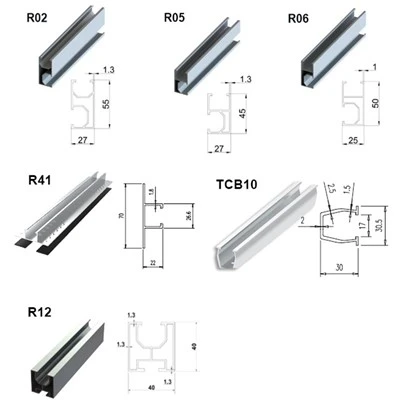

Dielectric Isolation Mechanics: EPDM Gaskets and Insulating Shims
Preventing electrolyte continuity requires physical barriers that permanently separate dissimilar metal surfaces. Bristar structural engineering incorporates specially formulated EPDM gaskets and high-density polyethylene insulating washers beneath every clamping point and flashing plate.
These components maintain dielectric resistance exceeding 10^9Ω, completely arresting electron transfer across the bimetallic interface. Furthermore, EPDM elastomer compounds exhibit a shore hardness of 70±5 Shore A and retain elasticity across extreme thermal cycling from -40 °C to +120 °C, ensuring consistent clamp preload without compression set deformation.
Accelerated Weathering and Salt Spray Durability Verification
Long-term structural reliability cannot rely solely on theoretical potential charts; it demands rigorous empirical validation. Bristar subjects its assembled aluminum and stainless steel joints to continuous neutral salt spray (NSS) testing in accordance with ASTM B117 protocols for 3,000 hours.
Post-test metallurgical analysis using scanning electron microscopy (SEM) confirms zero sub-surface exfoliation or thread seizure on AL6005-T5 profiles protected by EPDM isolation layers and an anodized film thickness ≥ 10um. This empirical verification guarantees a 25-year operational lifespan in aggressive coastal and industrial environments.
Frequently Asked Questions (FAQ)
What causes galvanic corrosion between solar rails and bolts?
Galvanic corrosion occurs when an electrolyte bridges the electrochemical potential difference between dissimilar metals-specifically AL6005-T5 aluminum rails and SUS304 stainless steel bolts-triggering accelerated localized metal degradation.
How do EPDM gaskets stop bimetallic corrosion in solar racking?
EPDM gaskets act as a dielectric physical barrier with high electrical resistance, eliminating direct metal-to-metal contact and preventing the electron transfer required to establish an active galvanic cell.
Do isolated aluminum mounting systems withstand rigorous coastal salt spray tests?
Yes. Systems engineered with anodized films ≥ 10um and proper EPDM isolation withstand over 3,000 hours of continuous ASTM B117 salt spray testing without structural compromise or thread degradation.