

Mechanical Performance of AL6005-T5 Extrusions
AL6005-T5 aluminum alloy provides the necessary strength-to-weight ratio for high-load installations. With a yield strength of ≥240Mpa and ultimate tensile strength of ≥260Mpa, it outperforms standard 6063-T5 alloys in extreme deflection scenarios. In hurricane-prone regions, the extrusion profile must be optimized for torsional rigidity to prevent "flutter" under laminar wind flow conditions.
| Property | Specification (AL6005-T5) | Specification (AL6005-T5) |
| Yield Strength | ≥240 Mpa | Mandatory |
| Anodized Coating | ≥10 μm | Corrosion Resistance |
| Torsional Modulus | 26 Gpa | Stability |
| Elongation | ≥8% | Ductility |
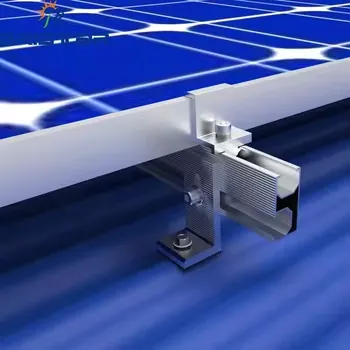
Fasteners and Connection Hardware Durability
The failure of solar racking often initiates at the connection points between the rail and the L-foot or flashing plate. All bolts must be specified as SUS304 or higher, with a minimum yield strength of 210Mpa. In regions where wind uplift forces oscillate, EPDM gaskets must be compressed to a specific torque of 12-15Nm to ensure a watertight seal while maintaining constant tension on the mounting bolt to prevent vibration loosening.
1.Fastener Standard: DIN 933 / ISO 4017 compliance for all M8/M10 bolts.
2.Corrosion Mitigation: Salt spray testing (ISO 9227) must exceed 1000 hours for all galvanized steel components.
3.Structural Load: Connection joints must pass a pull-out test of ≥10KN in high-density substrates.
Load Calculation and Compliance Standards
Structural design must align with AS/NZS 1170.2 or ASCE 7-16 to account for site-specific topographic multipliers. Installations in high wind zones require a tilt angle optimization-generally between 10° and 15°-to minimize the coefficient of drag (CdC_dCd).
When calculating the total design load (FFF), use the following formula: F=A⋅qp⋅Cd
Where:
1.A = Tributary area of the panel
2.qp = Peak velocity pressure
3.Cd = Drag coefficient based on tilt and wind incidence angle
Frequently Asked Questions
What is the wind load capacity of Bristar mounting systems?
+
-
Our standard systems are engineered to withstand wind speeds of up to 60m/s (216km/h). Final capacity is validated based on your specific project location's wind zone map and tilt angle requirements per AS/NZS 1170.2.
How do you ensure corrosion resistance in coastal wind zones?
+
-
We specify an anodized film thickness of ≥10μm for all AL6005-T5 components and utilize SUS304 grade stainless steel for fasteners. These materials are subjected to 1000-hour salt spray testing per ISO 9227 to verify durability.
What is the typical turnaround for structural certification documents?
+
-
We provide site-specific structural calculation reports within 3-5 business days upon receipt of project dimensions, site topography, and soil/roof substrate data. All reports are verified by our in-house engineering team to ensure local code compliance.