


Choosing the Right Solar Mounting Systems for Various Roof Types
Roof structure determines the failure mode of a photovoltaic mounting system long before module efficiency becomes relevant. Incorrect solar bracket selection can result in water leakage, galvanic corrosion, roof deformation, or uplift failure under wind speeds above 45m/s. The mounting interface between the roof substrate and the rail system must therefore be matched to roof geometry, structural load path, and local design standards such as AS/NZS 1170.2, EN 1991-1-4, and IBC 2021.
For commercial and residential rooftop PV projects, the primary engineering variables are roof material, pull-out resistance, thermal expansion coefficient, and waterproofing method. Aluminum alloy AL6005-T5 and SUS304 stainless steel remain the dominant material combination due to their corrosion resistance and stable mechanical performance in coastal and high-humidity regions.
Why Roof Geometry Changes Structural Behavior
Roof slope directly affects uplift pressure distribution.
Roofs above 10° tilt generate higher edge uplift coefficients.
Roof corners experience peak negative pressure zones under cyclonic wind conditions.
Rail span distance must be recalculated when snow load exceeds 1.0KN/㎡.
Thermal expansion of aluminum rails can exceed 2.4mm over 6m rail length under temperature variation from -20°C to 80°C.
For coastal installations, salt spray resistance becomes a determining factor. Standard anodized aluminum film thickness should remain ≥10μm under ISO 9227 salt spray testing.
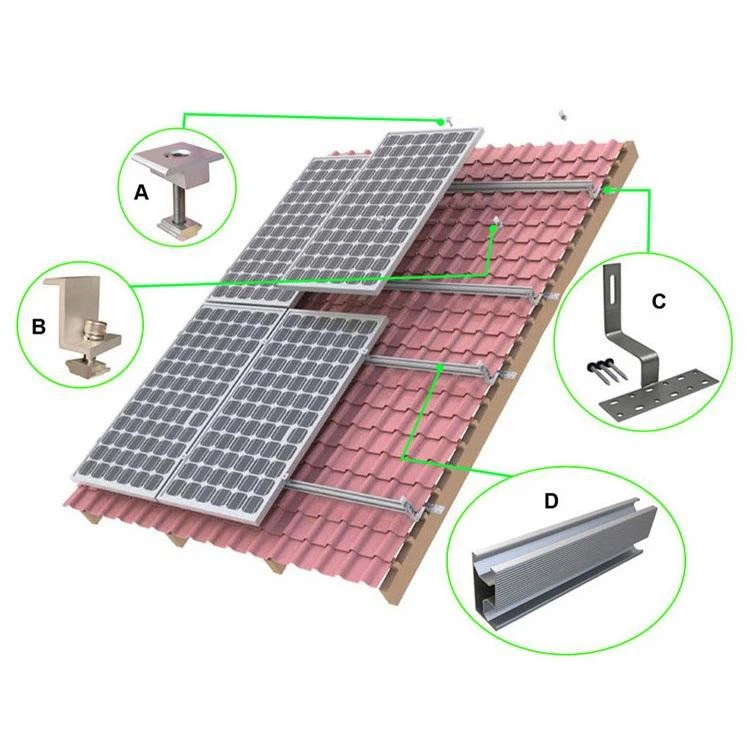
| Roof Type | Recommended Mounting Method | Main Structural Material | Typical Wind Load | Waterproofing Method | Installation Speed |
|---|---|---|---|---|---|
| Standing Seam Metal Roof | Non-penetrating seam clamp | AL6005-T5 + SUS304 | 45-60m/s | EPDM interface isolation | Fast |
| Corrugated Metal Roof | L-foot + self-tapping screw | Aluminum rail | 45-60m/s | EPDM gasket + flashing | Fast |
| Concrete Tile Roof | Adjustable roof hook | SUS304 | 40-55m/s | EPDM gasket + flashing | Fast |
| Clay Tile Roof | Side-mounted roof hook | SUS304 | 35-50m/s | Tile replacement flashing | Fast |
| Flat Concrete Roof | Ballasted system | HDG steel + aluminum | 35-50m/s | Non-penetrating | Fast |
| TPO/PVC Flat Roof | Chemical anchor or ballast | Hot-dip galvanized steel | 35-45m/s | Non-penetrating | Fast |
Metal Roof Solar Mounting Systems: Clamp Force and Waterproofing Control
Standing seam roofs remain the most installation-efficient commercial rooftop option because they avoid roof penetration. The clamp transfers module load directly into the seam profile without damaging waterproof layers.
| Parameter | Recommended Value |
| Clamp Material | AL6005-T5 |
| Bolt Material | SUS304 |
| Surface Treatment | Anodized ≥10μm |
| Clamp Torque | 16-18N·m |
| Design Wind Speed | ≤60m/s |
| Rail Span | 1200-1800mm |
Poor clamp matching creates local seam deformation and micro-cracking. Clamp geometry must match roof seam profile precisely, especially for trapezoidal and snap-lock profiles.
Corrugated Metal Roofs Require Controlled Penetration
Corrugated roofs use self-drilling screws combined with EPDM sealing interfaces.
Critical failure points include:
Over-torque causing EPDM deformation
Insufficient flashing overlap
Galvanic corrosion between carbon steel fasteners and aluminum rails
Water ingress around screw penetration points
EPDM compression ratio should remain between 25%-35% to maintain waterproof elasticity during thermal cycling.

Location : After the section "Corrugated Metal Roofs Require Controlled Penetration"
Image Description : Close-up installation view of aluminum L-feet mounted on corrugated metal roof with EPDM gasket, self-drilling screws, and rail connection.
ALT Tag : corrugated metal roof solar mounting with EPDM waterproof gasket and aluminum rail system
[CTA Block]
Hook: Reduce roof leakage risk under high wind regions.
Button Text: Consult Our Solar Structural Engineers Today
Conclusion
Choosing the correct solar mounting system starts with roof structural behavior rather than module layout. Metal roofs prioritize clamp compatibility and waterproof compression control. Tile roofs depend on accurate roof hook positioning and flashing integration. Flat roofs require validated ballast calculations and uplift resistance verification.
For EPC contractors and solar distributors sourcing from China, supplier evaluation should include structural calculations, corrosion testing, and manufacturing tolerance consistency in addition to price comparison. Mounting failure normally originates from interface details, not from the rail itself.
FAQ
Q: How can installers reduce roof leakage risk on metal roof solar projects?
A: Use EPDM gasket compression control, compatible seam clamps, and stainless steel fasteners. Avoid over-torque on self-drilling screws. Waterproofing failure commonly occurs at penetration points rather than rail connections.
Q: What wind load can a standard roof solar racking system withstand?
A: Most commercial aluminum solar mounting systems are designed for 45-60m/s wind speed under AS/NZS 1170.2 or ASCE 7 standards. Final design depends on roof height, terrain category, and module tilt angle.
Q: Can OEM solar mounting suppliers in China provide customized roof hook designs?
A: Yes. Most experienced manufacturers support customized SUS304 roof hooks based on tile geometry, rail height, snow load, and local installation standards. MOQ normally depends on tooling complexity and surface treatment requirements.