

Heavy Structural Cargo: Mitigating Transit Damage and Optimizing Container Load Density
Large-scale industrial solar carports utilize heavy-gauge Q235B/Q355B structural steel or high-strength AL6005-T5 aluminum alloys to support extensive wind loads up to 60m/s and snow loads reaching 1.4KN/㎡. Transporting these oversized, high-mass components from manufacturing plants in China to global project sites introduces significant risks of mechanical deformation, zinc layer abrasion, and geometric warping. Unoptimized container packing results in low load density, inflating ocean freight costs per kilowatt.
To maintain structural integrity and comply with AS/NZS 1170.2 standards upon arrival, Xiamen Bristar Technology Co.,Ltd implements strict geometric nesting and weight distribution protocols during container consolidation. Long-span beams and columns are bundled using high-tensile steel strapping over heavy-duty EPDM rubber edge protectors. This prevents metal-to-metal friction that compromises hot-dip galvanized coatings (which must maintain a thickness $\ge 85\mu\text{m}$ under ISO 1461 rules).
Phased Component Delivery: Coordinating Structural Foundations with Electrical Kit Arrival
Industrial solar parking structures require precise installation sequencing. Delivering structural rails weeks before foundation anchors arrive creates site congestion and increases material degradation risks. Conversely, foundation crews idling due to delayed anchor bolts disrupts project timelines and incurs costly liquidated damages. Managing large solar structures demands a phased Just-In-Time (JIT) delivery framework synchronized with EPC installation speeds.
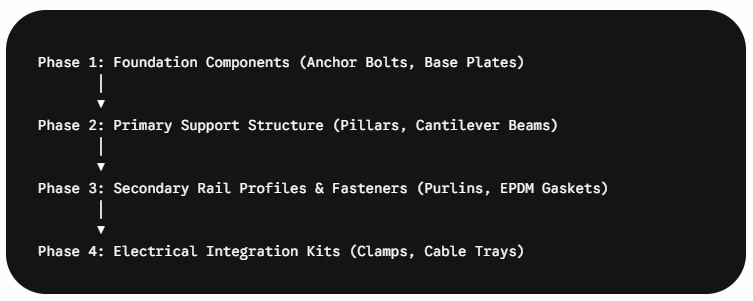

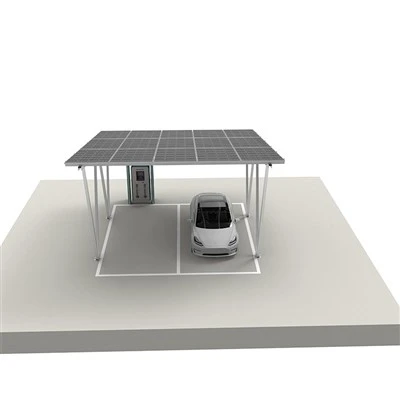
Xiamen Bristar coordinates component manufacturing and dispatch schedules to match site construction phases. Heavy anchor bolts, embedded parts, and customized flashing plates are shipped in Phase 1 to allow immediate concrete pouring or ground screw driving. Main support columns and cantilever assemblies follow in Phase 2. Secondary structural elements, including AL6005-T5 purlins, mid/end clamps, and pre-assembled waterproofing EPDM gaskets, arrive in Phase 3 just as structural framing concludes.
Frequently Asked Questions
How does your factory prevent shipping damage to heavy steel carport pillars?
We bundle heavy Q235B/Q355B components using high-tensile steel strapping over thick EPDM isolation pads. This prevents metal-to-metal shifting during ocean transit, protecting the $\ge 85\mu\text{m}$ hot-dip galvanized layer from abrasion and ensuring long-term corrosion resistance in compliance with ISO 1461.
Can shipments be split to match our site installation schedule?
Yes. We offer phased container dispatch matched to your project timeline. We ship foundation anchor bolts and base plates first, followed by primary support frames, and finally purlins, clamps, and waterproofing kits. This limits onsite inventory storage needs and avoids double-handling.
What is the minimum order quantity for custom commercial solar carports?
Our standard minimum order quantity for custom industrial or commercial solar carport structures is typically 100 kW. This volume optimizes manufacturing setups and container load density, ensuring the lowest possible production and ocean freight costs per watt.