

Factory Acceptance Testing (FAT) protocols dictate the structural integrity and 25-year operational lifespan of utility-scale photovoltaic installations. By enforcing rigorous pre-shipment inspections on yield strength (≥240MPa), anodic coating thickness (≥10μm for AL6005-T5), and dimensional tolerances within ±0.5mm, EPC contractors eliminate on-site modification delays and structural failures under AS/NZS 1170.2 wind loads.
1. Standardized Workflow for Factory Acceptance Testing (FAT)
Executing a systematic FAT protocol mitigates supply chain risks for tier-one PV module wholesale distributors and energy project procurement managers. The standard inspection sequence begins with raw material verification and progresses through mechanical stress trials before final packaging certification under ISO 9001 guidelines.
| Inspection Stage | Primary Parameter Verified | Target Engineering Standard | Non-Conformance Action |
| Raw Material Inflow | Chemical composition & Yield Strength | AL6005-T5 (≥ 240 MPa), SUS304 | Immediate batch rejection |
| Surface Treatment | Anodized film thickness & Adhesion | ≥ 10um (AAMA 611), Salt spray 1000h | Recoating or scrap |
| Dimensional Control | Extrusion profiles & Hole pitch | ± 0.5 mm tolerance threshold | Precision re-machining |
| Trial Assembly | Interlock gap & Torque resistance | Zero-interference dry fit | Tooling recalibration |
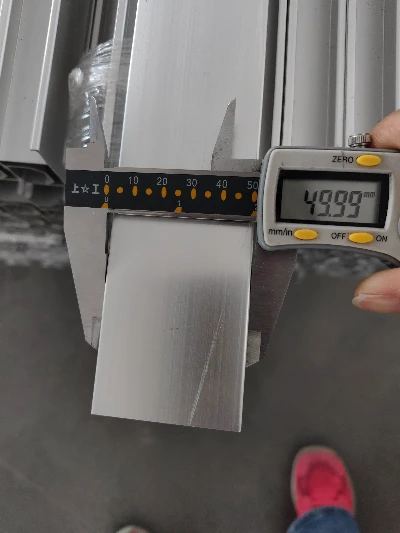
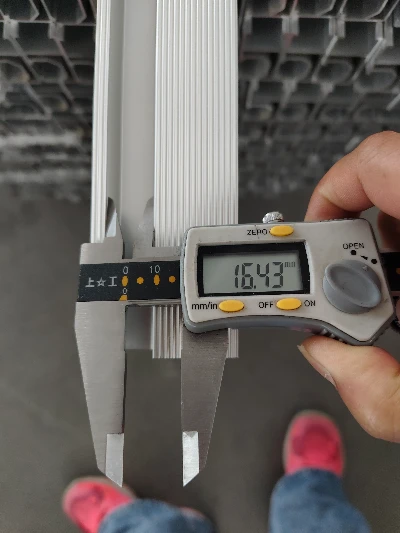
2. Dimensional Tolerances, Anodic Film Thickness, and Adhesion Testing
Material degradation compromises structural safety under heavy snow loads (≥ 1.4 kN/m^2) and extreme wind vectors. Precision testing isolates structural anomalies before components leave the manufacturing facility.
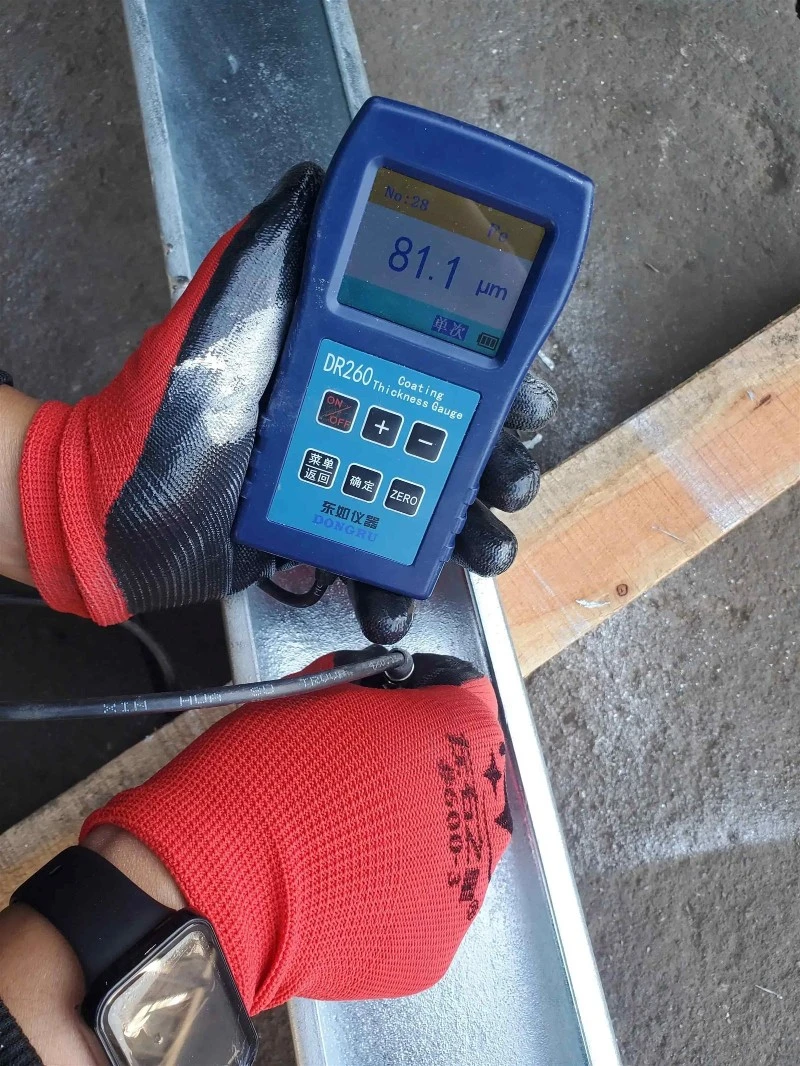
- Anodic Film Verification: Aluminum components (AL6005-T5) undergo eddy-current thickness testing to ensure an oxide layer ≥ 10um, preventing galvanic corrosion when paired with stainless steel fasteners (SUS304).
- Coating Adhesion Tests: Cross-hatch tape tests and impact resistance trials verify that protective coatings withstand rough handling during maritime transit and desert deployment.
- Tolerances Control: Extruded channels and rail connectors are audited via coordinate measuring machines (CMM) to maintain slot-alignment tolerances within ± 0.5 mm, ensuring seamless alignment with mid clamps and end clamps.
Hook: Eliminate structural failure risks on your next utility-scale PV deployment.
Consult Our Solar Structural Engineers Today
3. Trial Assembly (Dry Fit) Protocols for Eliminating On-Site Errors
Field modification of solar brackets increases labor costs and invalidates manufacturer warranties. A mandatory pre-shipment trial assembly replicates actual site conditions to guarantee structural fit.
- Substructure Mock-Up: A complete section of the mounting system-including base plates, flashing plates, and EPDM gaskets-is dry-assembled in the factory to check bolt-hole alignment and clamp tension.
- Torque Verification: Calibrated torque wrenches test all structural joints to ensure compliance with design load calculations, preventing bolt shearing or thread stripping during high-wind events.
- Component Interlock Analysis: Rails and splices are interconnected to verify that thermal expansion gaps and expansion joints function correctly without binding.

4. Conclusion and Quality Assurance Sign-Off
Rigorous factory acceptance testing bridges the gap between raw metallurgy and long-term asset performance. By enforcing strict thresholds on yield strength, coating depth, and mechanical tolerances, project developers safeguard their capital investments against premature environmental degradation.
Frequently Asked Questions (FAQ)
What specific standards are applied during the structural load testing of solar mounting systems?
Structural load testing adheres strictly to international benchmarks including AS/NZS 1170.2 for wind actions, EN 1991-1-3 for snow loads, and ISO 9001 quality management frameworks.
How are material surface treatments and corrosion resistance verified prior to shipment?
Aluminum components undergo eddy-current testing to guarantee an anodic film thickness of $\ge 10\mu m$, while fasteners are subjected to 1000-hour neutral salt spray tests to ensure marine-grade durability.
What is the standard Minimum Order Quantity (MOQ) requirement for customized OEM solar racking FAT protocols?
Custom OEM orders requiring tailored FAT documentation and specialized extrusion dies typically require an MOQ starting at 50kW, depending on profile complexity and alloy specifications.